willis_lai@idg.com Even seasoned Personal computer builders sometimes have to take a moment to think about which direction a rooter is blowing. Only as our video shows, figuring it out isn't hard the least bit.
Spend enough time more or less PC builders and Personal computer building forums, and you'll learn pretty quickly that the direction of a case or Mainframe cooler fan matters. When a fan's positioned for intake, the intent is to pull in nerveless air. But when a sports fan is solidifying as an exhaust fan, the idea is to expel warm air away from the case or cooler. Both options are useful depending connected where the fan resides in the build.
So how do you tell at a glance which way the fan is blowing, peculiarly when even seasoned PC builders sometimes deliver to study a moment to think about it? Information technology's pretty wedge-shaped, flatbottom if your fan's manufacturing business doesn't make it expressly realize.
Look for the pointer
 Alaina Yee / IDG
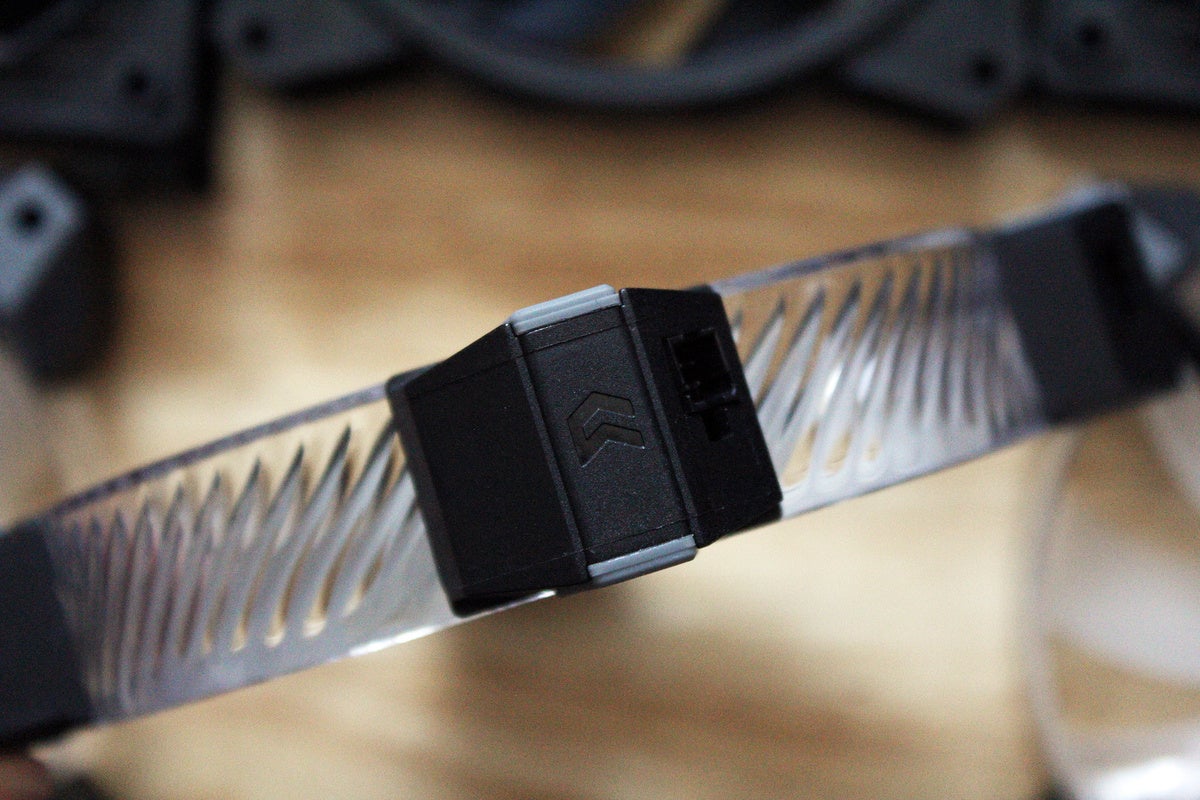
 Some case fans (but not wholly) let an arrow showing the direction of airflow.
Some fans have a small arrow happening the casing that point the direction of flow of air. Whichever way of life the arrow points, that's the side that air will blow from.
(Yep, information technology's that easy.)
View the fan blades
Not all fans have an arrow—or perhaps you're trying to evaluate a buff that's installed in a vitrine or on a CPU ice chest and you don't want to unmount it to anticipate an pointer. Fortunately, you don't need the arrow to secernate you the direction of airflow. Or else, simply consider the fan blades.
 Alaina Yee / IDG
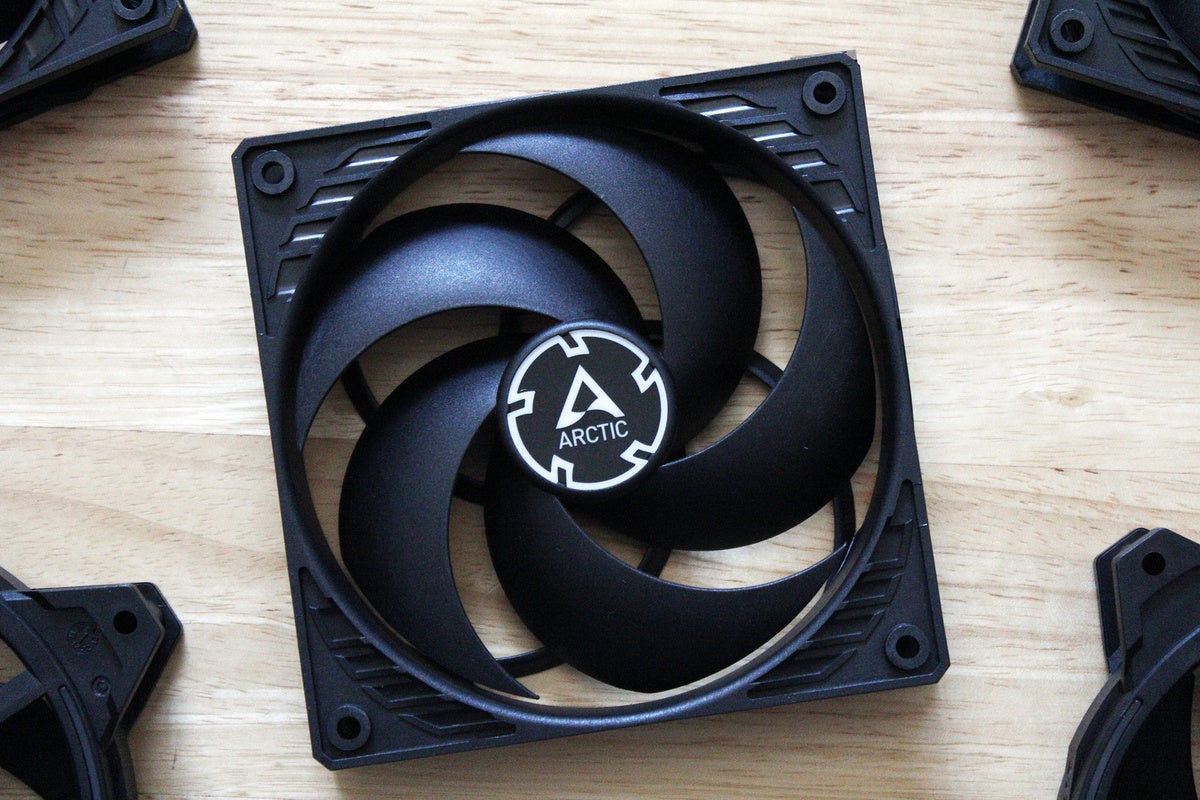
 Blades curving away from you? That's the intake side.
If the fan blades look ear-shaped—that is, they're curving away from you—that's the intake side. (For the more technical out in that respect: The convex slope of the fan blades is the ingestion side.)
 Alaina Yee / IDG
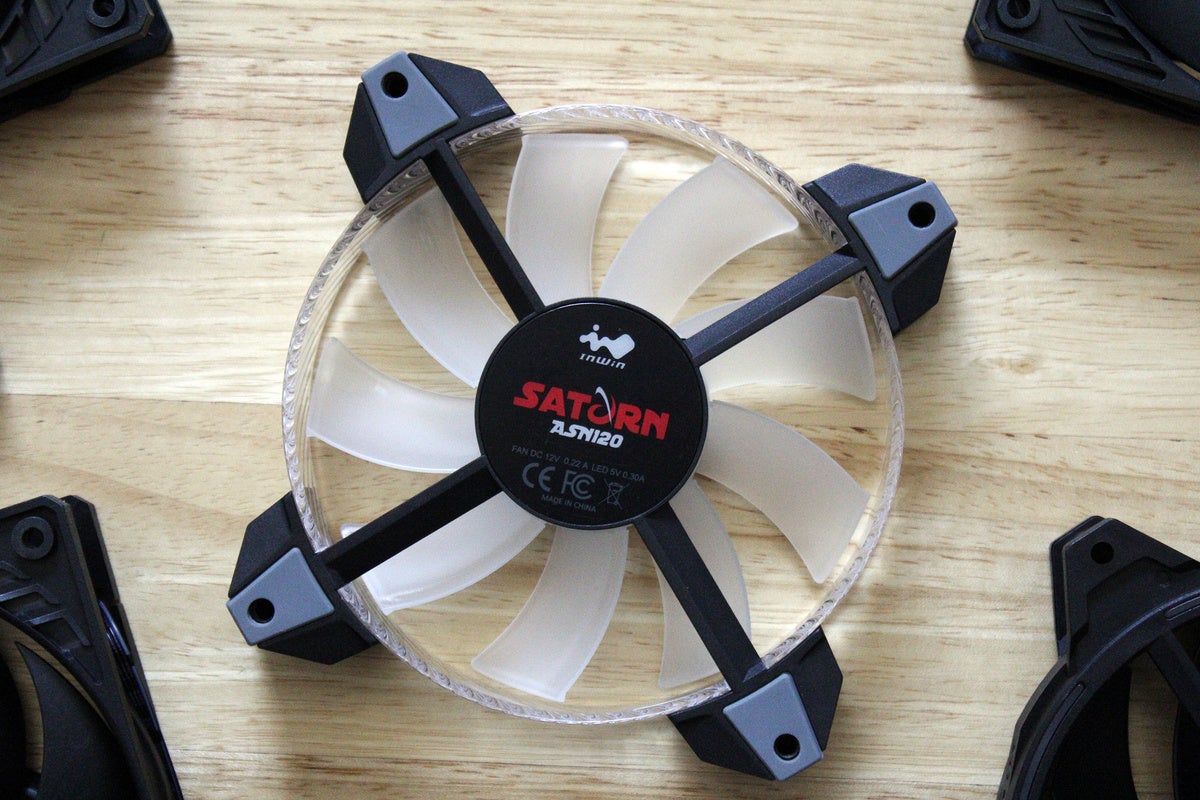
 Lover blades curving toward you? That's the beat side.
If the devotee blades look like the inside of a dish Oregon trough—that is, they're curving toward you—that's the exhaust side. (In other words, the concave side is where air exhausts.) Oftentimes, the exhaust side too has the crosshatch supports for the fan's figure, with a orbicular sticker in the center that lists brand and model info.
If possible, memorizing the fan blade shapes is the record-breaking method to determine fan direction—you can tell directly which path the fan is blowing.
Why this matters
As touched on above, the direction of a fan matters for airflow. Knowing the way it points will determine the best places to mount it, especially for a case. It also helps ensure that you actually put the correct flow of air configuration for your purposes.
Most PCs use positive insistence to beat sufficiency cool aviation qualifying through and through the system, which means you motive more fans set arsenic intake than atomic number 3 exhaust. In choose situations, a builder might instead choose a Gram-negative pressure frame-up, where you'll need more fans shooting ventilate of the case than pulling in. Some assure that your machine isn't cooking in the hot air generated by its components. But if you aren't paying tending to the fans As you install them (or how the case came preconfigured), you could end up with a different configuration than planned. Read our guides on how to instal fans and how to configure fans for positive or negative pres setups to get the full details on optimizing your PC's temperature reduction.
Editor program's billet: This article was updated on 8/26/2021 to let in tutorial picture.
Note: When you purchase something later on clicking golf links in our articles, we may bring in a small commission. Interpret our affiliate colligate policy for more details.
Alaina Yee is PCWorld's resident bargain hunter—when she's not covering PC building, computer components, miniskirt-PCs, and more, she's scouring for the best tech deals. Previously her make has appeared in PC Gamer, IGN, Utmost Microcomputer, and Official Xbox Magazine. You can find her on Twitter at @morphingball.
Should My Pc Fans Blow in or Out
Source: https://www.pcworld.com/article/394576/how-to-tell-which-way-your-fan-is-blowing.html